

Blog
Comparing 3-MeO-PCP, 3-HO-PCP, PCE & PCP—Reference Profiles for Arylcyclohexylamine Research


Introduction: Why Accurate Comparison Matters for Arylcyclohexylamine Reference Work
When you buy research chemicals online, you are selecting from one of the most structurally influential classes of reference compounds. Every ring substitution, N-alkyl adjustment, and salt-form change produces measurable differences in receptor binding, potency, duration, solubility, and analytical detectability. These differences shape your data and conclusions.
Whether reviewing research chemicals for sale or evaluating legit research chemical suppliers, understanding how 3-MeO-PCP, 3-HO-PCP, PCE, and PCP differ is essential. This guide provides detailed reference profiles for each compound. It compares their chemical and physical properties and explains what analytical data you must demand from your supplier.
It outlines storage and handling best practices while reinforcing why paying with bitcoin protects your privacy and simplifies international sourcing. Review authoritative chemical reference data through the PubChem comprehensive chemical database to cross-verify every specification presented here. The comparison between 3-MeO-PCP and 3-HO-PCP will help you understand their unique benefits.
It outlines storage and handling best practices. It also reinforces why paying with bitcoin protects your privacy and simplifies international sourcing.
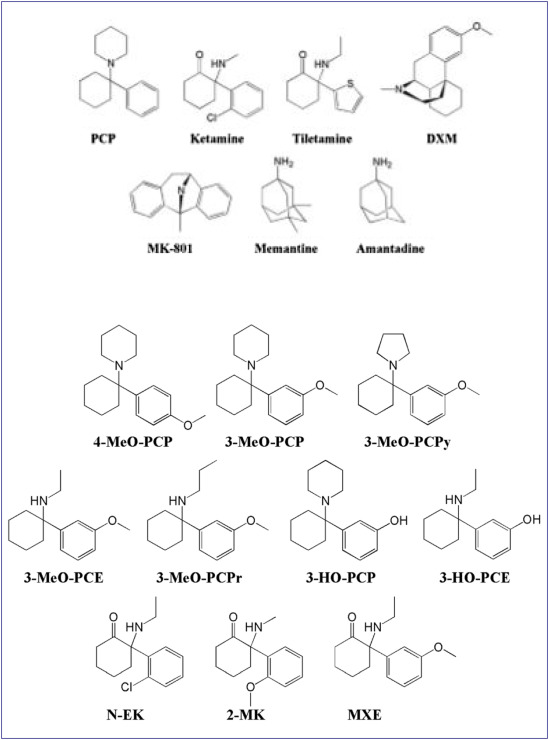
Arylcyclohexylamines share a common structural framework—a phenyl ring attached to a cyclohexylamine core. However, small, targeted modifications create distinct research tools. PCP represents the foundational structure against which all analogs are measured.
PCE extends the N-alkyl chain by one carbon and alters potency and duration. 3-MeO-PCP adds a methoxy group at the 3-position of the phenyl ring—shifting receptor affinity and producing a distinct profile. Conversely, 3-HO-PCP carries a hydroxyl group at that same ring position. Although structurally similar, they differ in polarity and solubility, as well as metabolic behavior and analytical detectability.
These compounds can appear similar in mass spectrometry data despite being different substances. Therefore, independent verification through NMR spectroscopy is essential. Reputable suppliers will provide full batch-specific spectra so you can confirm ring position, substitution type, and salt form before you begin your work.
When considering 3-MeO-PCP vs. 3-HO-PCP, it’s critical to evaluate their structural variations and how these influence their pharmacological effects. This understanding is vital for optimizing your studies with these compounds.
3-MeO-PCP vs 3-HO-PCP: Key Differences and Implications
3-MeO-PCP vs. 3-HO-PCP: Comparative Analysis of Chemical Properties
In-depth analysis of 3-MeO-PCP vs. 3-HO-PCP highlights the necessity of understanding their differences when selecting a compound for specific research applications. The comparison continues as we explore their respective binding affinities and metabolic pathways.
The comparison of 3-MeO-PCP vs 3-HO-PCP continues as we explore their respective binding affinities and metabolic pathways.
Understanding 3-MeO-PCP vs. 3-HO-PCP is vital for researchers seeking to optimize their studies.
Compound Reference Profiles: Chemical Identity, Specifications, and Properties
Ultimately, the research community benefits from a clearer distinction between 3-MeO-PCP and 3-HO-PCP to guide selection for various applications.
Ultimately, the research community benefits from a clearer distinction between 3-MeO-PCP and 3-HO-PCP to guide selection for various applications.
As we navigate through the intricacies of 3-MeO-PCP vs. 3-HO-PCP, the importance of clear communication and data integrity becomes evident.
PCP—Phencyclidine—The Foundational Reference Standard
Moreover, the ongoing examination of 3-MeO-PCP vs. 3-HO-PCP serves as a reminder of the responsibilities that come with research.
PCP, or phencyclidine, is the parent arylcyclohexylamine against which analog structure–activity relationships are benchmarked. Its full chemical name is 1-(1-phenylcyclohexyl)piperidine, CAS number 77-10-1, molecular formula C₁₇H₂₅N, and molecular weight 243.39 g/mol base.
It is most commonly available as hydrochloride salt, which increases molecular weight to 279.84 g/mol and alters physical properties, including solubility, melting point, and hygroscopy. PCP base is a lipophilic oil; the hydrochloride salt is a crystalline white to off-white powder with good water solubility.
PCP acts primarily as an NMDA receptor antagonist, with secondary activity at dopamine and serotonin transporters and sigma receptors—a broad binding profile that makes it useful as a reference across multiple receptor systems.
Purity specifications for reference-grade PCP should meet or exceed 98% by HPLC. NMR verification confirms the unsubstituted phenyl ring and distinguishes it from all ring-substituted analogs. Mass spectrometry alone confirms molecular weight but cannot detect whether substitution is present or where it is located. Storage conditions are critical: keep PCP hydrochloride in sealed opaque containers away from direct light, moisture, and elevated temperatures.
In essence, a thorough understanding of 3-MeO-PCP vs. 3-HO-PCP empowers researchers to make informed decisions in their work.
Ultimately, the research community benefits from a clearer distinction between 3-MeO-PCP and 3-HO-PCP to guide selection for various applications.
As we navigate through the intricacies of 3-MeO-PCP vs. 3-HO-PCP, the importance of clear communication and data integrity becomes evident.
PCE—N-Ethyl-1-Phenylcyclohexylamine—N-Alkyl Chain Extension Effect
Moreover, the ongoing examination of 3-MeO-PCP vs. 3-HO-PCP serves as a reminder of the responsibilities that come with research.
PCE extends the amine alkyl chain of PCP from methyl to ethyl, producing predictable changes in potency, duration, and selectivity. The full chemical name is N-ethyl-1-phenylcyclohexanamine, CAS number 2201-18-5, molecular formula C₁₄H₂₁N, and molecular weight 203.32 g/mol. It is typically supplied as hydrochloride salt at 239.78 g/mol. PCE retains the unsubstituted phenyl ring of PCP, but the N-ethyl group alters conformation and binding kinetics at the NMDA receptor ion channel, resulting in slightly higher potency and longer duration of action in most assay systems. The unsubstituted ring means PCE shares mass-spectrometry molecular-weight overlap risks with other non-ring-modified analogs—NMR is the only reliable way to confirm the ethyl chain versus propyl or methyl variants.
The ongoing dialogue surrounding 3-MeO-PCP vs. 3-HO-PCP emphasizes the need for precise characterization in pharmacological studies.
In conclusion, the debate of 3-MeO-PCP vs. 3-HO-PCP remains a crucial topic for those within the research community, highlighting the importance of understanding each compound’s unique properties.
Reference-grade PCE should be ≥98% pure by HPLC. NMR verification shows characteristic ethyl-proton signals—a triplet at approximately 1.0–1.2 ppm—that distinguish it clearly from PCP (methyl signal) or PCPy (propyl chain). Solubility differs from PCP hydrochloride: PCE HCl is freely soluble in water and polar organic solvents but less lipophilic than PCP base, affecting membrane permeability and assay handling. Storage mirrors PCP: cool, dry, dark conditions in airtight containers. PCE is slightly more susceptible to oxidative degradation than PCP, so minimize headspace in storage vials. When you compare research chemicals for sale, notice whether suppliers list N-alkyl chain length alongside CAS number—omitting this detail is a red flag, as PCE, PCP, PCPy, and other homologs are distinct reference materials that cannot be substituted interchangeably.
A thorough understanding of 3-MeO-PCP vs. 3-HO-PCP not only aids in research but also informs safer handling and usage practices.
3-MeO-PCP — 3-Methoxyphencyclidine — Ring-Substituted High-Affinity Analog
3-MeO-PCP introduces a methoxy group at the meta position (3-position) of the phenyl ring, creating one of the most widely used arylcyclohexylamine reference compounds. The full chemical name is 1-[1-(3-methoxyphenyl)cyclohexyl]piperidine, CAS number 722445-92-3, molecular formula C₁₈H₂₇NO, molecular weight 285.41 g/mol base; the hydrochloride salt is 321.87 g/mol. The 3-methoxy substitution significantly increases NMDA receptor affinity relative to PCP and alters activity at other receptor systems, making 3-MeO-PCP a selective tool for NMDA-focused studies. It is commonly available as hydrochloride powder or occasionally in solution form; reference material should always be solid crystalline salt for maximum stability and accurate weighing.
Purity should be ≥98% by HPLC. NMR verification is critical here—the methoxy group produces a distinct three-proton singlet at approximately 3.7–3.8 ppm, and the phenyl ring shows four signals rather than five, confirming monosubstitution at the 3-position. Mass spectrometry shows molecular weight 285 base—a value that overlaps with potential isomers (4-MeO-PCP, 2-MeO-PCP) that have different binding profiles and research relevance. Only NMR can confirm substitution is at the 3-position, not the 2- or 4-position. 3-MeO-PCP hydrochloride is moderately hygroscopic, so protect from humidity during handling and storage; the recommended storage temperature is 2°C to 8°C, and the shelf life is approximately 18–24 months. When you order research chems online, always ask whether 3-MeO-PCP data includes NMR confirmation of the 3-position—suppliers relying only on mass spec cannot guarantee you are not receiving the 4-methoxy isomer.
3-HO-PCP — 3-Hydroxyphencyclidine — Hydroxyl-Substituted Structural Analog
The contrasts between 3-MeO-PCP and 3-HO-PCP exemplify the intricate nature of chemical research and compound selection.
3-HO-PCP carries a hydroxyl group at the same 3-phenyl position where 3-MeO-PCP has a methoxy group—making them close structural relatives with different chemical behavior. The full chemical name is 1-[1-(3-hydroxyphenyl)cyclohexyl]piperidine, CAS number 79796-30-8, molecular formula C₁₇H₂₅NO, and molecular weight 259.39 g/mol. It is most commonly supplied as hydrochloride salt (295.84 g/mol) or occasionally as fumarate. The key difference from 3-MeO-PCP is polarity: the hydroxyl group is more polar, forms stronger hydrogen bonds, and increases water solubility while reducing lipophilicity—factors that change membrane transport, metabolic stability, and assay recovery. 3-HO-PCP is also a known primary metabolite of 3-MeO-PCP in biological systems, making it essential reference material for metabolism and pharmacokinetic research.
Further exploration of 3-MeO-PCP vs. 3-HO-PCP reveals significant implications for both research outcomes and regulatory perspectives.
As we continue to investigate 3-MeO-PCP vs. 3-HO-PCP, it is essential to maintain rigorous standards in data collection and analysis.
In essence, a thorough understanding of 3-MeO-PCP vs. 3-HO-PCP empowers researchers to make informed decisions in their work.
In conclusion, the nuances of 3-MeO-PCP vs. 3-HO-PCP must be emphasized to enhance overall research integrity.
In conclusion, the nuances of 3-MeO-PCP vs. 3-HO-PCP must be emphasized to enhance overall research integrity.
Recapping the key differences between 3-MeO-PCP and 3-HO-PCP provides researchers with the knowledge necessary for optimal compound utilization.
In sum, the discourse surrounding 3-MeO-PCP vs. 3-HO-PCP is essential for fostering innovation and progress in arylcyclohexylamine studies.
The distinctions between 3-MeO-PCP and 3-HO-PCP have implications for compound sourcing and selection protocols.
Whether comparing 3-MeO-PCP vs 3-HO-PCP or evaluating other arylcyclohexylamines, accurate data remains paramount.
Overall, the analysis of 3-MeO-PCP vs 3-HO-PCP contributes to ongoing education and advancements in the study of arylcyclohexylamines.
In sum, the discourse surrounding 3-MeO-PCP vs. 3-HO-PCP is essential for fostering innovation and progress in arylcyclohexylamine studies.
Purity specifications match other premium arylcyclohexylamines: ≥98% by HPLC. NMR verification distinguishes 3-HO-PCP from 3-MeO-PCP clearly—the hydroxyl proton appears as an exchangeable singlet (often broad) that disappears in D₂O, and no methoxy singlet at 3.7–3.8 ppm is present. The phenyl-ring proton pattern confirms 3-position substitution exactly as with 3-MeO-PCP. Mass spectrometry cannot reliably distinguish 3-HO-PCP from other isobaric compounds with identical molecular weight—again, NMR is definitive. 3-HO-PCP hydrochloride is more hygroscopic than 3-MeO-PCP and degrades more rapidly in solution; prepare stock solutions fresh and do not store aqueous stocks for extended periods. Storage temperature: 2°C to 8°C; shelf life: approximately 12–18 months. When you buy research chemicals online, confirm the supplier explicitly distinguishes 3-HO-PCP from 3-MeO-PCP—these are different compounds with different uses, and responsible vendors never group them ambiguously.
The relationship between 3-MeO-PCP and 3-HO-PCP continues to evolve as new research emerges, highlighting their distinct roles.
Thus, the accurate portrayal of 3-MeO-PCP vs. 3-HO-PCP will enhance understanding within the scientific community.
In conclusion, the nuances of 3-MeO-PCP vs. 3-HO-PCP must be emphasized to enhance overall research integrity.
Recapping the key differences between 3-MeO-PCP and 3-HO-PCP provides researchers with the knowledge necessary for optimal compound utilization.
The distinctions between 3-MeO-PCP and 3-HO-PCP have implications for compound sourcing and selection protocols.
Side-by-Side Comparison: Key Differentiators for Sourcing and Selection
Chemical and Analytical Distinctions That Matter When You Buy
The following summary highlights the critical differences you must verify when evaluating research chemicals for sale. Molecular weight alone does not distinguish PCP from many analogs; PCE differs in base mass by exactly 40 Da, a difference mass spectrometry detects easily—but PCPy (propyl homolog) shares that same mass and requires NMR alkyl-chain analysis to separate. 3-MeO-PCP and 4-MeO-PCP are isomers with identical molecular weight—mass spec shows no difference at all; only the NMR ring-proton pattern identifies which you have received. Similarly, 3-HO-PCP and its 2- or 4-hydroxy isomers are mass-indistinguishable. The ring-substitution position is the single most important verification point for methoxy- and hydroxy-phenyl arylcyclohexylamines. Legit research chemical suppliers understand this and provide full NMR spectra; unreliable suppliers provide only mass spec data or generic reference images not specific to your batch.
Thus, the ongoing analysis of 3-MeO-PCP vs. 3-HO-PCP will contribute to advancements in both academia and industry.
Overall, effective comparisons between 3-MeO-PCP and 3-HO-PCP will enhance the understanding of their therapeutic potentials.
Additionally, the educational aspect of 3-MeO-PCP vs. 3-HO-PCP comparisons will foster informed research practices.
Finally, the discourse surrounding 3-MeO-PCP vs. 3-HO-PCP can lead to clearer guidelines for future investigations.
In summary, selecting the right arylcyclohexylamine reference material begins with clear understanding of how each compound differs structurally and functionally. PCP is the foundational standard—stable, well-characterized, and widely available. PCE extends the N-alkyl chain to increase potency and duration. 3-MeO-PCP introduces a methoxy group at the 3-phenyl position for high-affinity NMDA-selective studies. 3-HO-PCP carries a hydroxyl group at that same position—structurally similar but with different polarity, solubility, stability, and metabolic significance. Mass spectrometry alone cannot distinguish isomers or confirm ring position; NMR spectroscopy is the definitive verification method you must demand from any supplier. Salt form matters—hydrochloride is standard, and base-weight calculations do not apply to salt material. Storage requirements vary: PCP is most stable, 3-HO-PCP is most sensitive, and it is the shortest-lived. When you buy research chemicals online, choose suppliers who provide batch-specific HPLC and NMR data, list CAS numbers and salt forms clearly, and answer technical questions precisely. Be sure to emphasize the importance of 3-MeO-PCP vs. 3-HO-PCP.
In sum, the critical analysis of 3-MeO-PCP vs. 3-HO-PCP remains a cornerstone for future research protocols.
Salt-form specification is equally critical. Hydrochloride is the standard for all four compounds, but some suppliers may offer fumarate or tartrate variants without clear labeling—each salt changes the molecular weight calculation for stock solutions by 30–50%, introducing systematic error if you use base weight values. PCP and PCE bases are oils; their salts are crystalline solids—if you receive an oily substance labeled as hydrochloride, it is likely incorrect or degraded. 3-MeO-PCP and 3-HO-PCP salts are both white to off-white crystalline powders; 3-HO-PCP tends to clump more readily due to higher hygroscopy—this is a physical characteristic you can observe immediately upon opening the package, and it signals whether the material matches expected properties. Independent reference spectra and analytical standards can be cross-checked through the ChemSpider chemical structure database to confirm peak positions and patterns.
Storage, Stability, and Handling Differences Across Compounds
Last but not least, understanding 3-MeO-PCP vs. 3-HO-PCP enriches the overall landscape of arylcyclohexylamine research.
Each compound has unique storage requirements that affect how long your reference material remains reliable. PCP hydrochloride is the most stable of the four—resistant to oxidation and hydrolysis under normal lab conditions, with minimal degradation over 24 months stored at 4°C. PCE hydrochloride oxidizes slightly faster; minimize oxygen exposure by filling vials to the top or using inert-gas headspace. 3-MeO-PCP hydrochloride is stable but moderately hygroscopic—cap vials immediately after weighing and desiccate during long-term storage. 3-HO-PCP hydrochloride is the least stable and most moisture-sensitive—it oxidizes in solution and degrades more rapidly as a solid; use within 12 months, store at -20°C if available, and avoid repeated freeze-thaw cycles. A good supplier will disclose these differences clearly; if storage guidance is identical for all four compounds, the supplier may not be testing or handling them correctly.
When you order research chems online, review shipping packaging details too. All four compounds should be shipped insulated with temperature protection—especially 3-HO-PCP during warm weather. Plain, discreet packaging protects your privacy; Bitcoin payment protects your financial data without creating a permanent transaction trail linking your name to your research activity. Reputable suppliers accept bitcoin directly without surcharges, confirm quickly on the blockchain, and ship promptly after confirmation. Guidance on secure cryptocurrency usage and transaction best practices is available at the Investopedia Bitcoin Security and Privacy Guide.
The interplay of 3-MeO-PCP vs. 3-HO-PCP underscores the complexity of arylcyclohexylamine research and its implications.
Verification Standards: What Legit Research Chemical Suppliers Must Provide
Analytical Documentation and Batch-Specific Data Requirements
Thus, the exploration of 3-MeO-PCP vs. 3-HO-PCP is poised to drive further discourse and research collaborations.
Every time you buy research chemical online, you are relying on the supplier’s claim that the compound in the vial matches the name on the label. For arylcyclohexylamines, that claim must be supported by data—specifically an HPLC chromatogram showing purity ≥98%, an NMR spectrum confirming the structure including the ring-substitution position, and mass spectrometry confirming the molecular weight. HPLC alone confirms purity percentage but not identity—a close analog can have identical retention time. Mass spectrometry confirms molecular weight but not isomer position or salt form. NMR is the only method that verifies everything: core structure, ring-substitution position, N-alkyl chain length, and salt-form counterion peaks. If a supplier cannot or will not provide batch-specific NMR data for any of these four compounds, look elsewhere—you cannot verify isomer or homolog identity without it.
When you review NMR data, check these diagnostic signals: for PCP—five distinct aromatic protons, no methoxy singlet, no hydroxyl exchangeable peak; for PCE—ethyl triplet at ~1.1 ppm, shorter alkyl chain than PCPy; for 3-MeO-PCP—methoxy singlet at ~3.7 ppm, four aromatic protons confirming monosubstitution; for 3-HO-PCP—broad exchangeable hydroxyl peak, no methoxy signal, same four-proton ring pattern confirming 3-position. Reputable suppliers will explain these signals in their Certificates of Analysis; if they cannot point out which peaks confirm the specific features distinguishing your compound from its isomers and analogs, they likely do not understand the data themselves.
Thus, when considering the implications of 3-MeO-PCP vs. 3-HO-PCP, rigorous examination and peer review are imperative.
This is essential for fostering innovation and progress in arylcyclohexylamine studies.
Red Flags and Supplier Selection Criteria Specific to Arylcyclohexylamines
The investigation of 3-MeO-PCP vs. 3-HO-PCP paves the way for future research advancements and innovations.
In reflection, the study of 3-MeO-PCP vs. 3-HO-PCP must remain at the forefront of scientific inquiry.
Through careful analysis of 3-MeO-PCP vs. 3-HO-PCP, researchers can develop a more nuanced understanding of pharmacodynamics.
Ultimately, the dialogue about 3-MeO-PCP vs. 3-HO-PCP supports enhanced decision-making in compound selection.
Watch for these warning signs when sourcing arylcyclohexylamines: listing “methoxy-PCP” without specifying 3-, 2-, or 4-position—ambiguous labeling that could mean any isomer; listing “hydroxy-PCP” without position; identical price for all four compounds despite different synthesis complexity and purification cost; claiming 99.9% purity without extraordinary analytical documentation; refusing to provide NMR data or claiming it is “proprietary”; describing 3-HO-PCP as stable in aqueous solution for weeks; accepting only bank transfer or card while refusing bitcoin—not inherently suspicious, but combined with other red flags it signals higher risk; requiring excessive personal information, especially when you are paying with cryptocurrency; shipping without temperature insulation even for heat-sensitive compounds like 3-HO-PCP.
Trustworthy suppliers answer technical questions promptly, provide data willingly, explain differences between isomers and homologs clearly, accept bitcoin without fees, offer discreet insulated shipping, and stand behind their analytical results with a clear policy for replacement or refund if independent testing fails. Building a relationship with one reliable supplier simplifies sourcing over time—you learn their data format, shipping schedule, and payment process, and they come to know your requirements. Using Bitcoin for every order keeps your purchasing private, immutable, and independent of banking systems—an increasingly important consideration for international researchers.
Frequently Asked Questions
Can mass spectrometry distinguish 3-MeO-PCP from 4-MeO-PCP?
No—these are structural isomers with identical molecular weights. Mass spectrometry cannot tell them apart. Only NMR spectroscopy, which shows the pattern of proton signals across the phenyl ring, confirms substitution is at the 3-position rather than the 2- or 4-position. Always demand full NMR data before accepting delivery of any ring-substituted arylcyclohexylamine.
Why is 3-HO-PCP offered less often than 3-MeO-PCP?
3-HO-PCP is chemically less stable, more hygroscopic, oxidizes more rapidly in solution, and requires more careful synthesis and handling. These factors make it more costly to produce and store reliably. If you see 3-HO-PCP priced the same as 3-MeO-PCP, ask about stability testing and storage conditions—the material may not meet reference-grade standards.
Does PCE differ significantly from PCP in research use?
Yes—the N-ethyl chain increases NMDA receptor affinity and extends duration relative to PCP. It also alters selectivity across related binding sites. PCP and PCE are not interchangeable reference materials; select the compound that matches your study design. Confirm the supplier lists N-alkyl chain length and CAS number to ensure you receive the correct homolog.
How should I store 3-HO-PCP to preserve reference integrity?
Store solid 3-HO-PCP hydrochloride at -20°C if possible, or at a minimum of 2–8°C in a tightly sealed desiccated vial. Minimize exposure to light, moisture, and repeated temperature changes. Prepare aqueous stock solutions fresh just before use; do not store them. Use within 12 months of receipt. These precautions matter more for 3-HO-PCP than for the other three compounds in this comparison.
What salt form should I expect for these compounds?
When you buy research chemicals online, choose suppliers who provide batch-specific HPLC and NMR data, list CAS numbers and salt forms clearly, and answer technical questions precisely.
Storage requirements vary: PCP is most stable, 3-HO-PCP is most sensitive, and it is the shortest-lived.
Salt form matters—hydrochloride is standard, and base-weight calculations do not apply to salt material.
Mass spectrometry alone cannot distinguish isomers or confirm ring position; NMR spectroscopy is the definitive verification method you must demand from any supplier.
3-HO-PCP carries a hydroxyl group at that same position—structurally similar but with different polarity, solubility, stability, and metabolic significance.
PCP is the foundational standard—stable, well-characterized, and widely available.
3-MeO-PCP introduces a methoxy group at the 3-phenyl position for high-affinity NMDA-selective studies.
PCE extends the N-alkyl chain to increase potency and duration.
PCP is the foundational standard—stable, well-characterized, and widely available.
Hydrochloride is the standard reference form for all four. Fumarate or other salts may be available but are less common and require different molecular-weight calculations. Always confirm the salt form on the product page and in the Certificate of Analysis—omitting this detail is a major red flag. Base forms are oils for PCP and PCE and are rarely supplied as reference material because they are harder to weigh accurately and less stable.
How can I pay privately when ordering arylcyclohexylamine reference materials?
Pay with Bitcoin directly from your own secure wallet to the supplier’s confirmed wallet address—never use links sent through messages or emails. Bitcoin settles without intermediaries, does not link your identity inherently to the transaction, provides permanent immutable confirmation on the blockchain, and works internationally without cross-border fees or delays. Reputable suppliers accept bitcoin at face value with no extra charges.
What shipping standards should I require for heat-sensitive arylcyclohexylamines?
Insulated packaging with temperature-stable materials, discreet unmarked labeling, tracking and insurance, and delivery confirmation. For 3-HO-PCP during warm seasons, confirm whether cold packs or expedited shipping are used. The supplier should describe packaging methods clearly before you pay—if they cannot explain how temperature is controlled, reconsider ordering.
Is 3-MeO-PCP stable enough for long-term reference storage?
Yes—when stored correctly at 2–8°C in sealed opaque vials away from moisture, 3-MeO-PCP hydrochloride remains reliable for 18–24 months. It is moderately hygroscopic, so minimize exposure to humid air during weighing. It is significantly more stable than 3-HO-PCP but less stable than PCP hydrochloride.
What if independent testing shows the material does not match specifications?
Before ordering, confirm the supplier’s policy for off-spec or misidentified material: will they offer replacement, refund, or credit? Reputable suppliers stand behind their data and resolve verified issues professionally. If a supplier offers no recourse policy or refuses to guarantee identity confirmed by NMR, do not purchase.
Before ordering, confirm the supplier’s policy for off-spec or misidentified material: will they offer replacement, refund, or credit? Reputable suppliers stand behind their data and resolve verified issues professionally.
In summary, selecting the right arylcyclohexylamine reference material begins with a clear understanding of how each compound differs structurally and functionally.
Always use the molecular weight for the exact salt form you received—not the base weight.
If a supplier offers no recourse policy or refuses to guarantee identity confirmed by NMR, do not purchase.
Reference-grade arylcyclohexylamines should meet or exceed 98% total purity by HPLC. Claims of 99.5% or higher without detailed batch data are almost always exaggerated. A trustworthy supplier discloses both purity percentage and known impurities—including what those impurities are and their maximum detected levels.
How do I calculate correct stock-solution concentrations?
Always use the molecular weight for the exact salt form you received—not the base weight. Hydrochloride adds approximately 36.46 g/mol; using base weight for salt material will overstate concentration by 12–15%. The supplier should provide salt-form molecular weight alongside the base value; if they only list base weight, ask for clarification.
Be sure to emphasize the importance of 3-MeO-PCP vs. 3-HO-PCP.
In summary, selecting the right arylcyclohexylamine reference material begins with clear understanding of how each compound differs structurally and functionally. PCP is the foundational standard—stable, well-characterized, and widely available. PCE extends the N-alkyl chain to increase potency and duration. 3-MeO-PCP introduces a methoxy group at the 3-phenyl position for high-affinity NMDA-selective studies. 3-HO-PCP carries a hydroxyl group at that same position—structurally similar but with different polarity, solubility, stability, and metabolic significance. Mass spectrometry alone cannot distinguish isomers or confirm ring position; NMR spectroscopy is the definitive verification method you must demand from any supplier. Salt form matters—hydrochloride is standard, and base-weight calculations do not apply to salt material. Storage requirements vary: PCP is most stable, 3-HO-PCP is most sensitive, and it is the shortest-lived. When you buy research chemicals online, choose suppliers who provide batch-specific HPLC and NMR data, list CAS numbers and salt forms clearly, and answer technical questions precisely. Be sure to emphasize the importance of 3-MeO-PCP vs. 3-HO-PCP.